The Myth That Folk Tunes Have One True Version
Folk tunes have no single true version: learn to hear changing melody, rhythm and ornament as signs of a tradition still being played and shared.
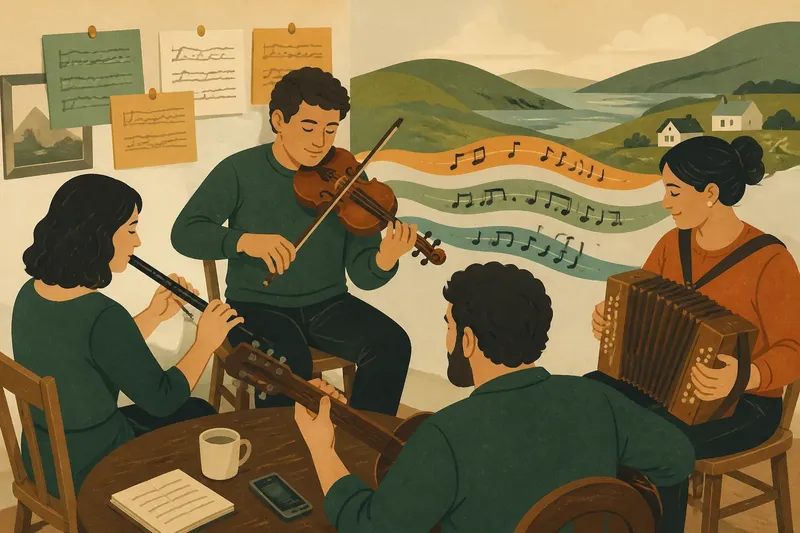
The common mistake is to treat the first folk tune you hear as the original and every later version as a deviation. That idea can make a lively melody sound like a test with one right answer. Folk tunes change as players remember, adapt and pass them on; hearing those differences is part of hearing the tradition.
What does “the same tune” mean?
Musicians often recognise a tune by its shape rather than by an exact sequence of notes. A rising phrase, a repeated turn and a familiar cadence can remain recognisable even when a player changes the pitches between them. Think of the tune as a path with landmarks: different walkers may take slightly different routes between the same bends.
That does not mean every melody is interchangeable. A change that alters the tune’s defining contour may make it sound like a different piece, while a shifted note or an added flourish may sit comfortably within a familiar version. The boundary is often heard collectively, through a community’s habits, rather than written down as a universal rule.
Where do variations enter?
Oral transmission is not a faulty copying process. A player learns by listening, singing, dancing or joining in, then recalls the tune through their own musical habits. Memory keeps some details firmly and lets others move. A singer might stretch a syllable where an instrumental player would add a quick note; a fiddler might shape a phrase to suit the bow.
Local style matters, too. A melody played for dancing may have a clear, steady pulse, while the same tune in a singing session may breathe around the words. Instrument, room, occasion and the people playing together all influence what comes out. Variation is not always a deliberate act of invention; often it is the ordinary result of making music in a particular place and moment.
- Melody: Listen for a changed note, a different opening or a phrase with a new shape.
- Rhythm: Notice whether a player lengthens a note, lifts the beat or settles into a more even pulse.
- Ornament: Hear how a singer or instrumentalist decorates a melody without losing its outline.
- Structure: Check whether phrases repeat, whether a verse is added or omitted, and how the tune ends.
These are useful listening points, not boxes to tick as errors. A variation may be striking in one performance and barely noticeable in another.
How can you listen across versions?
Try comparing recordings or performances of a tune you already know. Start by humming the shared outline, then attend to one feature at a time: the first phrase, the beat, or the ending. This makes differences easier to hear without forcing you to decide which version is “correct”. If you have a melody in a songbook, treat the notation as one useful account of the tune, not the final authority over every performance.
Say you know a dance tune from a family gathering and later hear a local session play it with a different final phrase. If the tune’s main contour and recurring pulse still feel familiar, you can hear the change as a choice within the tradition. Ask what the players are doing with that ending: does it lead neatly back into another round, suit their instruments or echo a local way of phrasing? The question opens your ears more than a verdict does.
Does a written version settle the question?
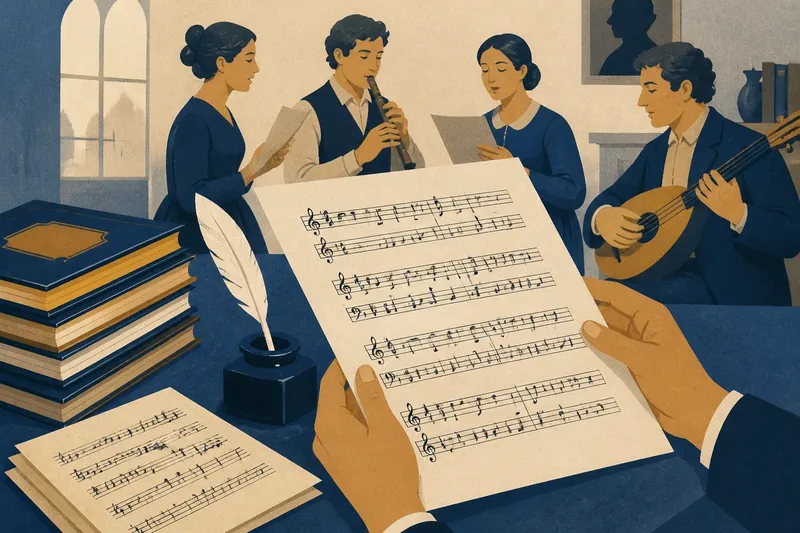
Notation can preserve details that might otherwise be forgotten, and it can help musicians learn a tune together. But a score has to select particular notes and rhythms from a performance. It cannot fully capture a singer’s breath, a fiddler’s touch or the slight timing that makes a phrase feel at home in a dance.
Recordings also preserve a moment rather than an eternal standard. A player may vary the tune on another occasion, or a different group may emphasise a different feature. A printed or recorded source is valuable evidence of how someone played it, not proof that all other forms are mistakes.
Why keep the differences in view?
Calling one version definitive can hide the people and circumstances that carried a tune. It may also make newer players wary of adding their own phrasing, even when adaptation is part of how a community keeps music in use. Paying attention to variation gives credit to individual performers while allowing a shared tune to remain shared.
That does not require pretending that every version has the same history or meaning. If you are learning a tune for a particular ensemble, dance or gathering, ask which version suits that setting and how its players usually shape it. Local knowledge can tell you more than an abstract search for an original.
What might you be wondering?
Can a folk tune have an original version?
Some tunes may have an identifiable source, but that does not make every later performance a lesser copy. In many oral traditions, the tune’s history is carried by multiple versions rather than a single fixed text.
How much can a tune change and still be the same?
There is no universal threshold, because players recognise tunes through a combination of contour, rhythm, recurring phrases and shared context. Listen for the features that remain stable as well as the ones that shift.
Should beginners stick to one version?
Learning one clear version can give you a helpful starting point, especially when playing with others. Once you can hear its outline, you can explore other versions and ask which details are essential in the setting where you are playing.
Is improvising the same as changing a folk tune?
Improvisation is a deliberate kind of invention, while many variations arise through memory, habit or local style. Both can shape a tune, but they need not have the same intention or role.
When a folk tune appears in a new form, listen for what has endured and what the current players have made their own. That balance—recognition alongside difference—is not a flaw to correct. It is one way a living tune stays in circulation.